How I'm using 11 lbs. of turmeric
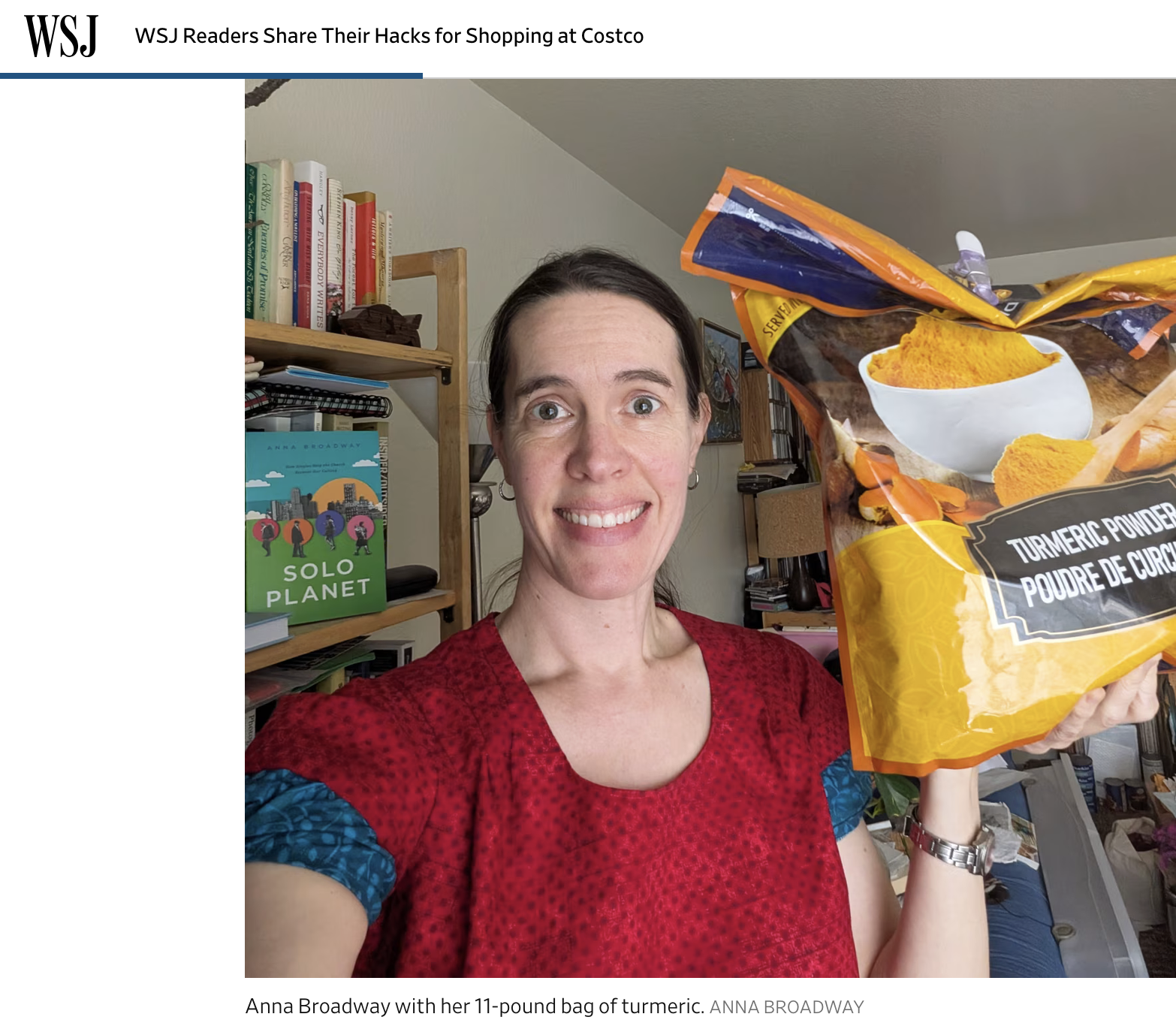
My recent inclusion in a Wall Street Journal piece on readers’ Costco hacks has prompted questions on just how I’m using the 11-pound bag of turmeric I bought at the Anchorage “business center” store several months ago. (Send me proof that the story prompted a purchase of Solo Planet, and I’ll share one of my favorite recipes that uses turmeric.)

Good question, Vince. Here are some of the ways I’m getting through it.
Think like a co-op.
First, in keeping with the cooking-for-one tips I wrote for The New York Times a couple years ago, I’ve split the bag with various people. The day I bought the bag, I stopped at an east Anchorage home where a woman I’d connected with through a Facebook group bought $5 worth (not quite a full gallon bag). A friend who calls me his “turmeric dealer” has bought a significant amount since, usually in $2 refills of a plastic quart-size container. I’ll share some of their tips below.
2. Make your own immunity shots.
I’ve not tried this personally, but the woman who bought $5 worth of the turmeric said she planned to do this. Considering such shots can go for $3-4 each (at least in Alaska, where transportation tends to give us higher food costs), homemade shots would save a lot of money.
3. Stir it into other drinks.
The friend who’s been my top turmeric “customer” adds it to all kinds of drinks, especially the homemade lemonade I gave him some concentrate for. I used to make — and love — a turmeric milk tea before bed that was supposed to help with sleep, but had to stop after it started giving me mild heartburn. I guess it’s possible to consumer too much turmeric.
4. Be sure to use it with pepper to maximize the benefit.
My turmeric-loving friend also stresses the importance of adding even a small pinch of pepper to any turmeric for the best results. I’m not well versed in the research, but multiple studies show the combination yields improved absorption.
5. Cook more Indian food.
I first discovered the wonderful cookbooks of Suvir Saran years ago and haven’t looked back. Both his American Masala and Indian Home Cooking have yielded many a delicious meal. Some of my favorites from each:
American Masala
Goan-style shrimp curry: I’ve been subbing Alaska salmon for shrimp in this for a while now and it’s always delicious. Bonus: the vibrant flavors make a tasty meal of even slightly freezer-burned or less-fresh salmon.
Roasted baby potatoes: You can make these with either fresh mint or cilantro if you don’t have both. Friends have called these so good “they’re almost sinful” (were pleasure a sin, that is; I don’t believe it’s inherently so).
Pro tip: When I buy cilantro in the business center’s 1 lb. bags, I turn it into herbes salees, following the recipe from the Eat Better, Sleep Better cookbook. That’s been a game-changer.
Chicken chickpea harira: This recipe’s so good I made a batch of it for my Lima hosts during the Peru stop for Solo Planet fieldwork.
Tomato chutney: I didn’t discover this recipe until at least a decade into owning the cookbook, but have come to love it in open-face fried-egg-and-cheese sandwiches. It’s also great on salmon fillets, cooked in the manner described in the next recipe mentioned.
Indian Home Cooking
Salmon “en papillote” uses a delicious cilantro-coconut chutney that’s equally good on salmon or used in other ways.
Stir-fried mixed summer squash: I was craving this recipe so much by a few months into fieldwork that I persuaded Beijing Subway employees to sell me a tiny portion of prepared mustard when I couldn’t find any powdered form in the grocery store. I also made a version of this on my Tokyo stop (and maybe elsewhere, too).
6. Add to quick breads and other baking.
I’ve yet to find a recipe that can’t handle a skosh of added turmeric (plus the pinch pepper, as recommended above). Any baked good that’s already using spices like cinnamon, ginger, allspice or cloves works especially well, though you could add it with other spices, too. Use the volumes of other spices as your guide.
7. Sub it for fresh turmeric in fire cider.
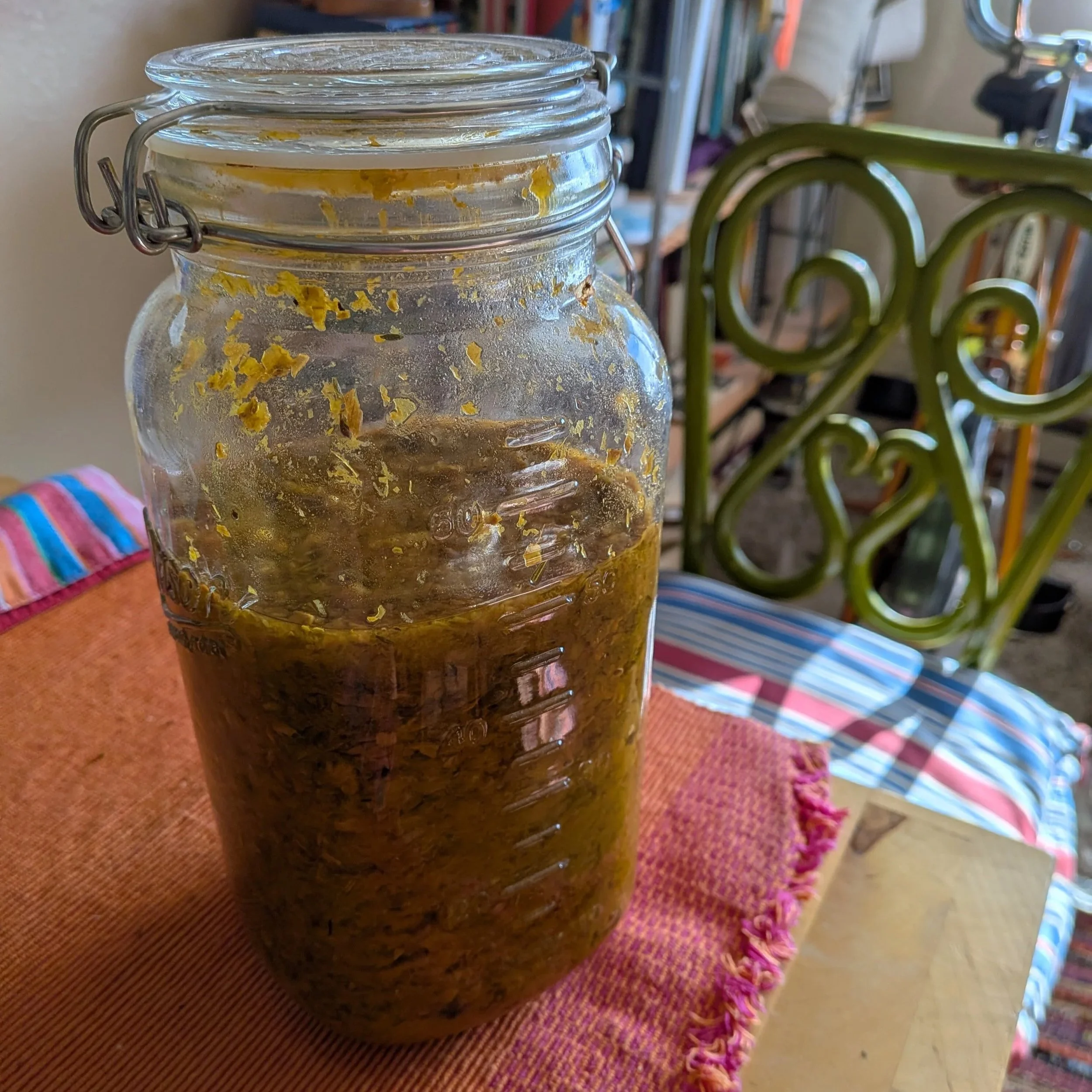
My latest batch of fire cider.
Especially when fall and winter cold season starts, I like to have fire cider on hand. This cold cure starts with chopped veggies and herbs that steep several week in apple cider vinegar (ideally the kind with a “mother”). Most recipes call for straining out the solids and then taking shots of the flavored vinegar on its own, but I’ve found that a bit hard to consume. Two options:
Mix your shot of strained fire cider into a can of V-8 for something like a virgin Bloody Mary.
Keep the solids in the vinegar and eat the mixture by spoonfuls. This is how I now prefer to do it.
I mostly make this recipe from Dropping Beets, but Rosemary Gladstone also has a whole book of recipes, from which I learned to make my own vinegar using organic apple and pear scraps. The book’s called Fire Cider!
Get a free turmeric-using recipe
As promised above, if you email me with proof that you bought a copy of Solo Planet after seeing the Wall Street Journal article (or this post), I’ll send you a free recipe for a yummy, easy soup that uses turmeric. Note that you might have to email to express your interest, then wait for my reply to attach a receipt photo or other proof.